 Cities of Art
Nothing more than the places of worship scattered throughout the Peninsula can tell the historical, artistic, and cultural transitions that Italy has experienced over the past two thousand years.
Around these buildings unfolded much of the social, economic, and political life of communities, thanks to the considerable resources that made their construction possible.
Within them, the greatest artists and craftsmen of their time worked on the architecture, façades, and decorations, creating masterpieces that we can still admire today as we walk through their naves.
Emilia-Romagna preserves in its art cities and throughout its territory magnificent religious buildings, some of which are true jewels of the Italian and European artistic heritage.
Whether you are religious or not matters little: set your beliefs aside and let yourself be guided on this journey to discover the most beautiful basilicas and cathedrals of our region.
Cathedral of Santa Maria Assunta e Santa Giustina
Place: Piacenza
Period of construction: 11th – 12th century
Architectural style: Romanesqu art
Curiosities: the great dome painted by Guercino can be fully visited, allowing visitors to stand just an arm’s length from the frescoes, forty metres above the ground
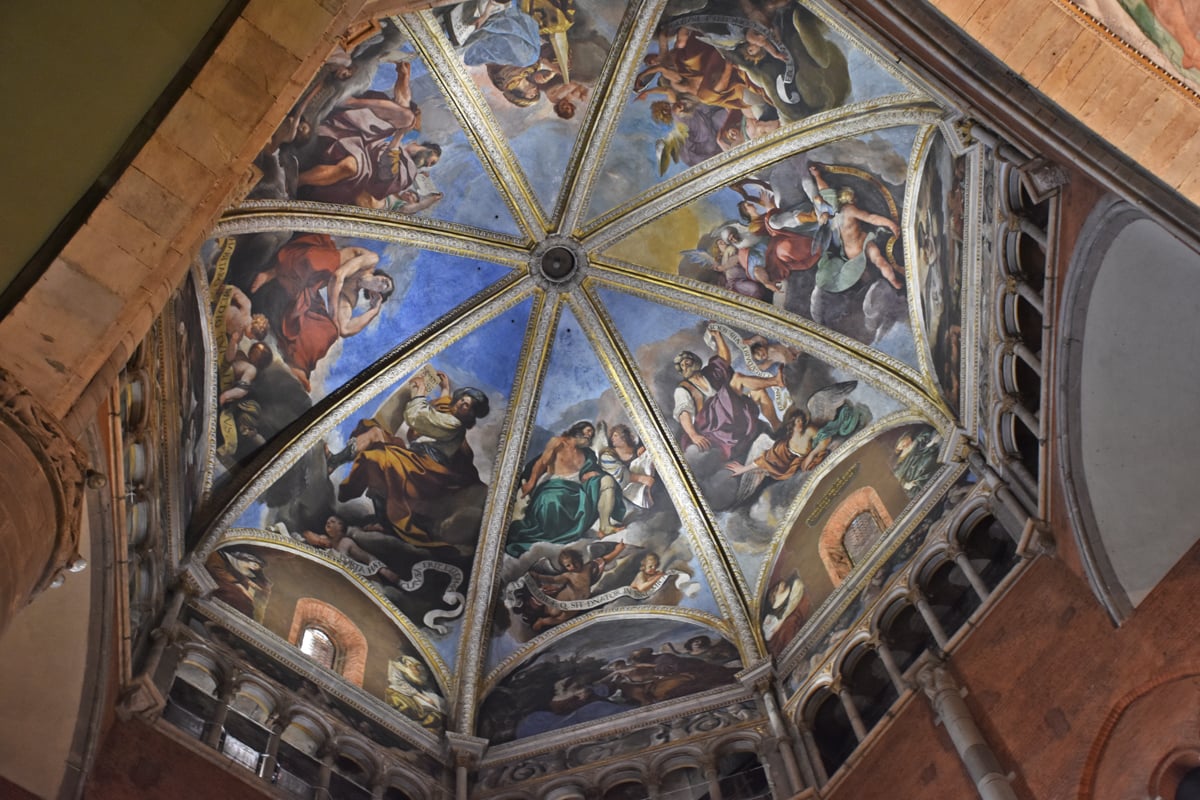
Built during the age of the great medieval construction sites, such as those of the cathedrals of Parma and Modena, Piacenza Cathedral stands as one of the most significant examples of Italian Romanesque architecture.
Here, the austere elegance of the thirteenth century blends harmoniously with the Baroque splendour of the pictorial decoration, reaching its expressive peak in the dome frescoed by Guercino.
Basilica of San Colombano
Place: Bobbio (Piacenza)
Period of construction: 11th – 16th century
Architectural style: Romanesque/Gothic art
Curiosities: in the Middle Ages, it was a fundamental stop for all the pilgrims who were headed to Rome along Via Francigena
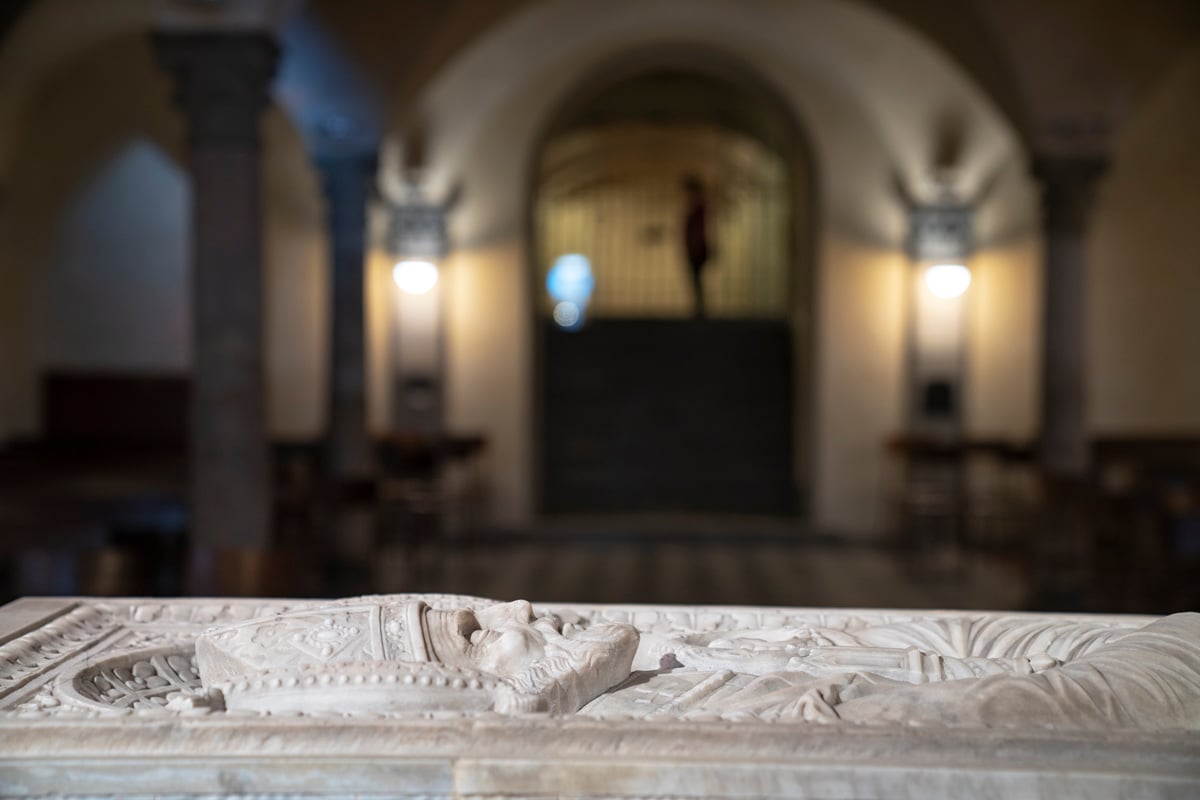
“Terribilis est locus iste” (“This place inspires reverent awe”) is what one reads upon crossing the threshold of the Basilica of San Colombano. The inscription invites respect for this sacred space, built in 1456 over a pre-existing church and developed around one of the most important monastic centres of its time.
The building is closely connected to the adjoining abbey, founded in 614 AD by Columbanus, the Irish monk who was among the leading figures in the Christianisation of early medieval Europe.
Basilica of the Blessed Ghiara Virgin
Place: Reggio nell’Emilia
Period of construction: 16th century
Architectural style: Renaissance art
Curiosities: the church was built thanks to the offerings of the faithful following a miracle associated with an image of the Virgin that once stood in that very place
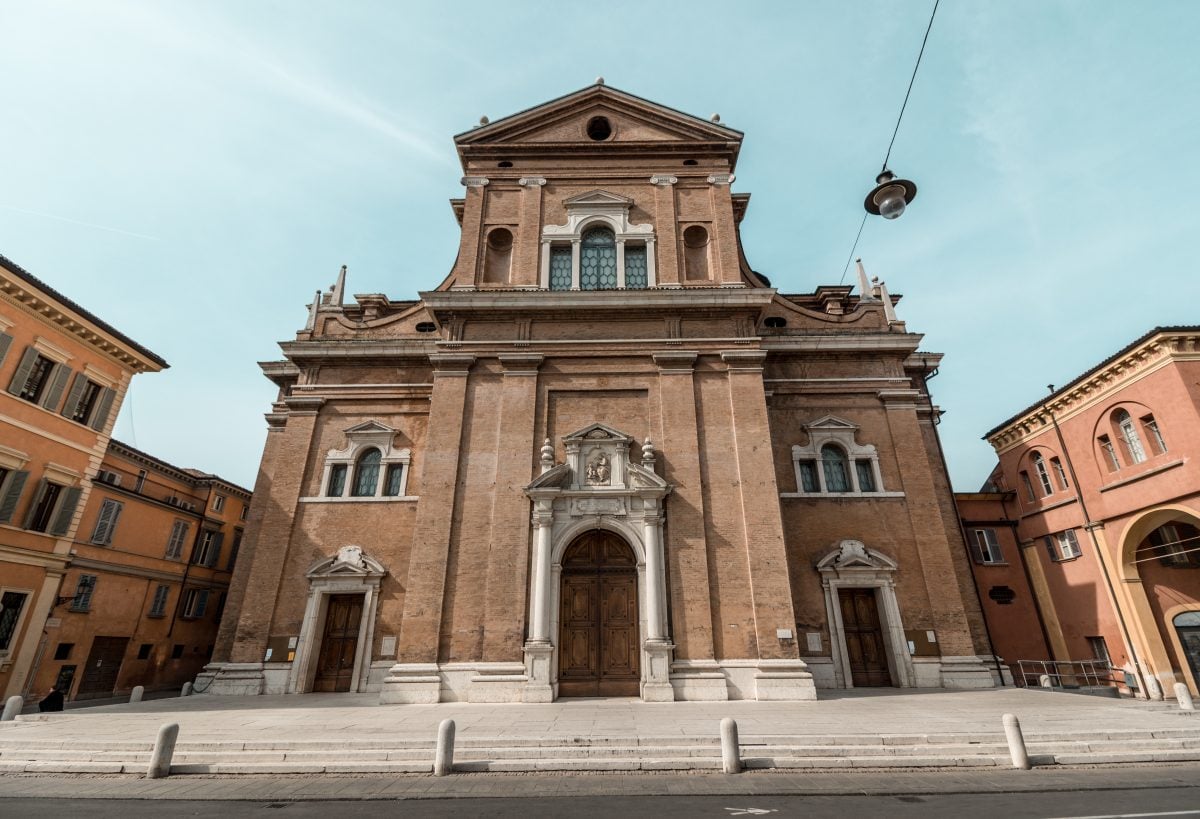
Deeply connected to the community of Reggio Emilia, the sanctuary rises in the heart of the city, in an area known as della Ghiara (or Giarra), named after the gravelly soil that once characterised it.
Designed by Alessandro Balbo from Ferrara starting in 1597, it represents a perfect synthesis of the artistic production of the city between the Renaissance and the Baroque. This harmony reaches its highest expression in the interiors, where the largest surviving painting of early seventeenth-century Emilian art is preserved intact.
Fidenza Cathedral
Place: Fidenza (Parma)
Period of construction: 12th century
Architectural style: Romanesque art
Curiosities: in the Middle Ages, it was an essential stop for all pilgrims travelling along the Via Francigena on their way to Rome
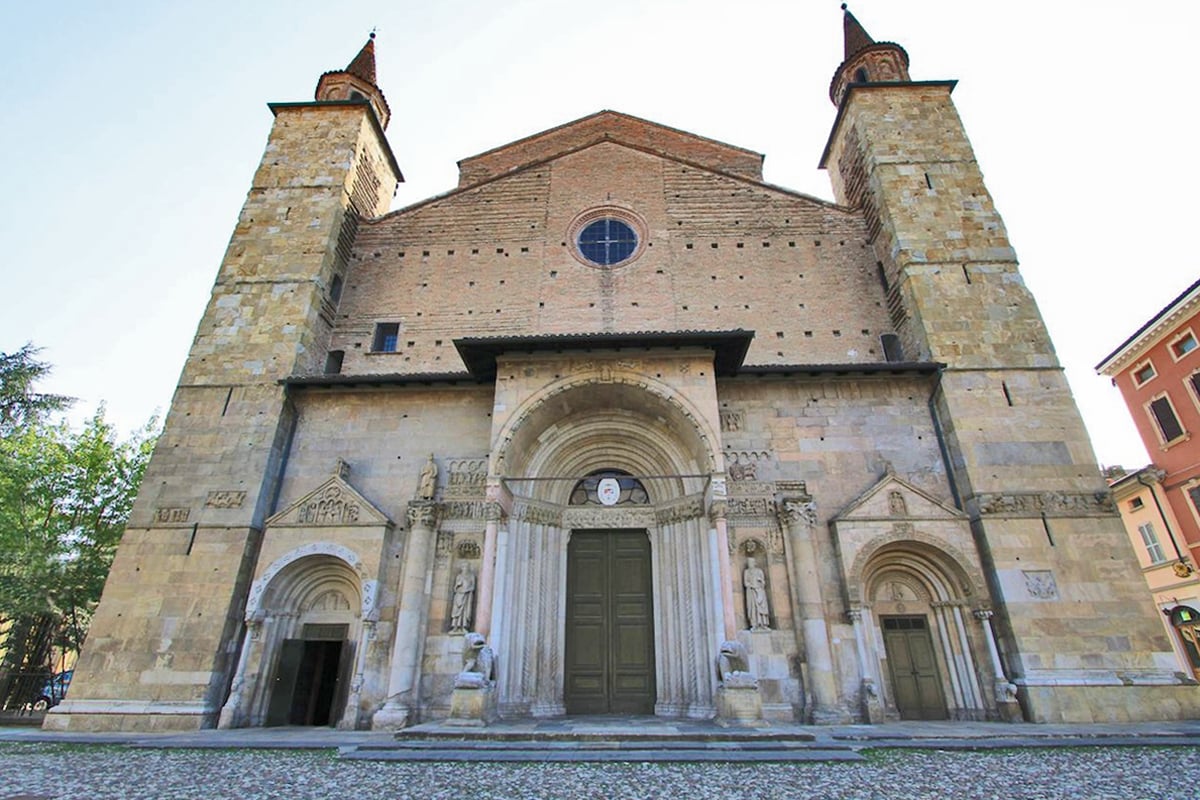
Described as “superb” by the great medieval historian Jacques Le Goff, the Cathedral of Fidenza boasts a thousand-year history linked to the cult of Saint Donnino, a martyr of the third century during the persecutions of Emperor Maximian.
Essential in its basilican layout yet extraordinary in its sculptural richness, it is regarded as one of the masterpieces of Po Valley Romanesque architecture, thanks to the contribution of the workshop of Benedetto Antelami, one of the greatest sculptors of the European Middle Ages.
Parma Cathedral
Place: Parma
Period of construction: 11th – 12th century
Architectural style: Romanesque art
Curiosities: it is said that Tiziano, passing by Parma, looking at the cupola frescoed by Correggio was left in such amazement that he said: “Turn it upside down, fill it with gold, and yet, it won’t be paid enough”
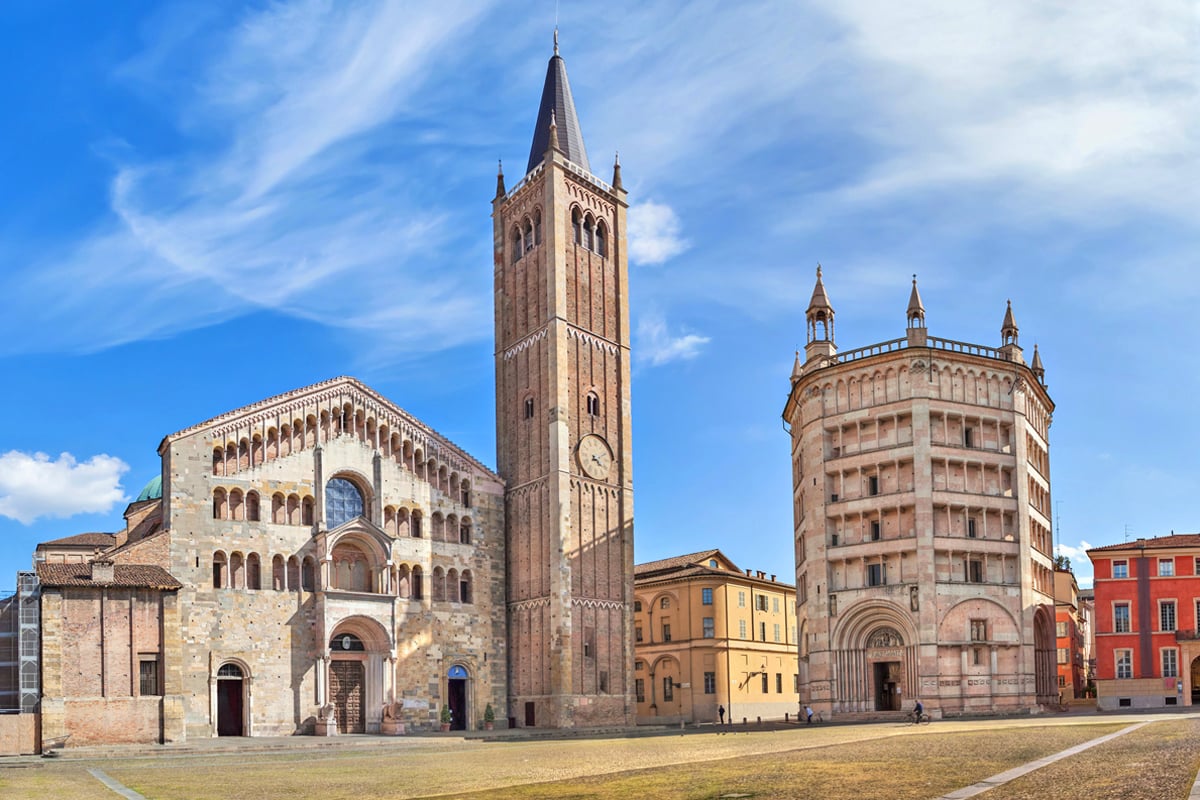
Together with its baptistery, the Cathedral of Parma has stood since the twelfth century as an extraordinary crossroads of art, history, and spirituality, one of the highest expressions of Italy’s artistic heritage.
A unique architectural complex, it masterfully unites the austerity of Benedetto Antelami’s Romanesque sculpture with the Renaissance magnificence of Correggio’s frescoes in the dome.
Church of San Silvestro
Place: Nonantola (Modena)
Period of construction: 12th century
Architectural style: Romanesque art
Curiosities: the crypt, made of a “forest” of 64 tiny columns, is one of the widest Romanesque churches in Europe
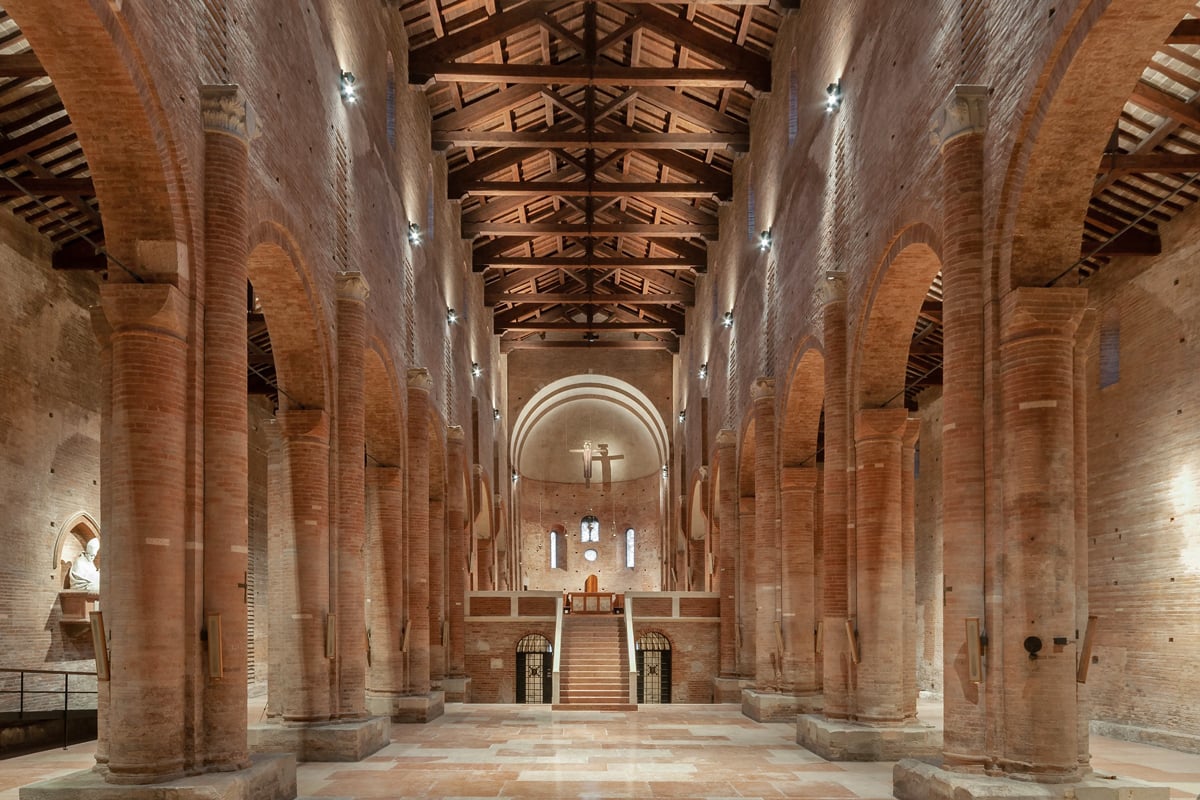
Built in the eleventh century on the remains of an earlier church, the building – with its Lombard-Romanesque forms – is an integral part of the Abbey of San Silvestro, founded by the Lombard Duke Astolfo in the mid-eighth century.
Throughout its thousand-year history, the complex has hosted popes and emperors, but above all it has been home to the monastic communities that have shaped and enlivened this corner of the Modena lowlands.
Cathedral of Santa Maria Assunta in Cielo e San Geminiano
Place: Modena
Period of construction: 11th – 14th century
Architectural style: Romanesque style
Curiosities: on the bas-relief of the cathedral’s north portal, known as the Porta della Pescheria, some believe there are sculpted scenes depicting the story of King Arthur, which, if true, would be the oldest known representation of the legend ever created in Italy
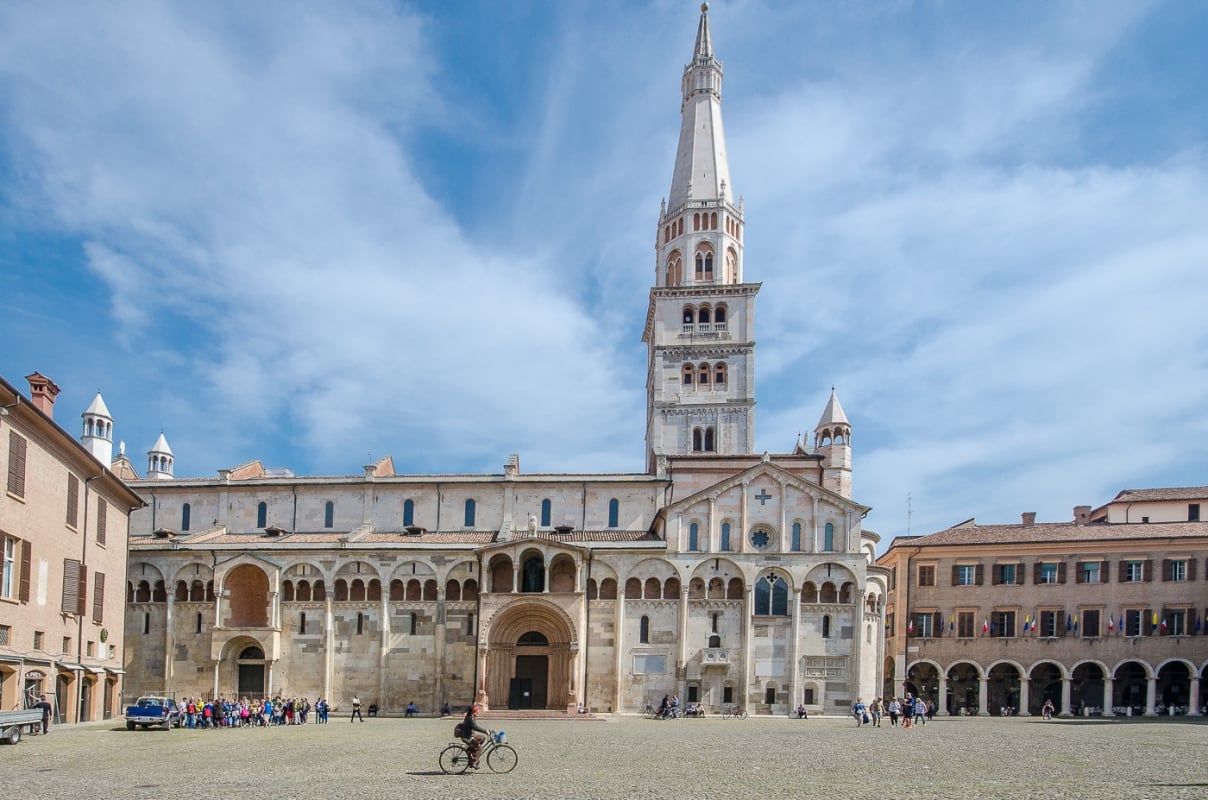
The Cathedral of Modena, together with the Ghirlandina Tower and Piazza Grande, is one of the greatest masterpieces of European Romanesque architecture and a UNESCO World Heritage Site.
Founded in 1099 at the initiative of the local community, the complex was conceived as a great stone book, inhabited by sculpted figures that enliven façades, portals, and capitals in an extraordinary fusion of classical heritage and the Romanesque language of the Po Valley.
The complex of Santo Stefano
Place: Bologna
Date of construction: 4th century – …
Architectural style: Early Christian Romanesque, Gothic style
Curiosities: in the crypt dedicated to Saint John the Baptist stands a column without a capital. It was brought to Bologna by Bishop Petronius upon his return from the Holy Land, and according to tradition, its height corresponds to that of Jesus
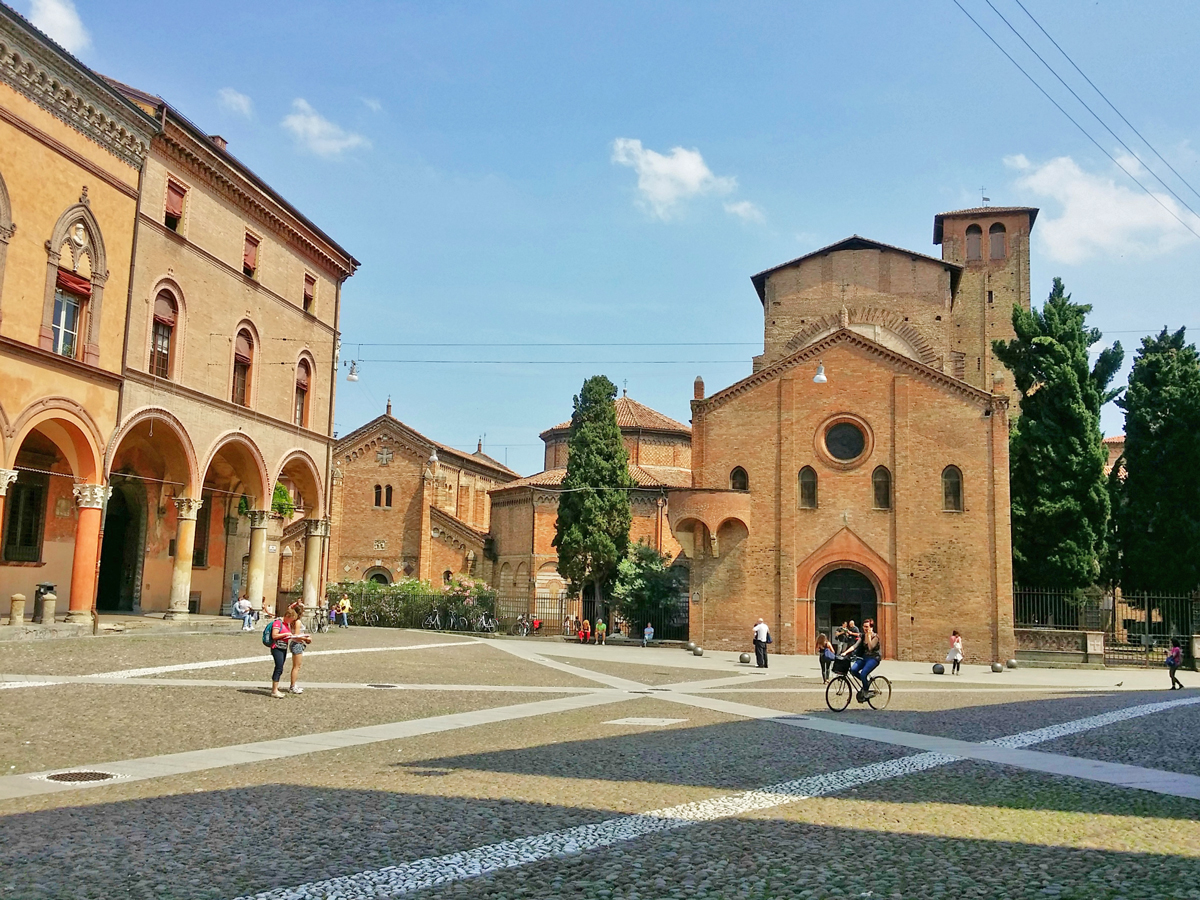
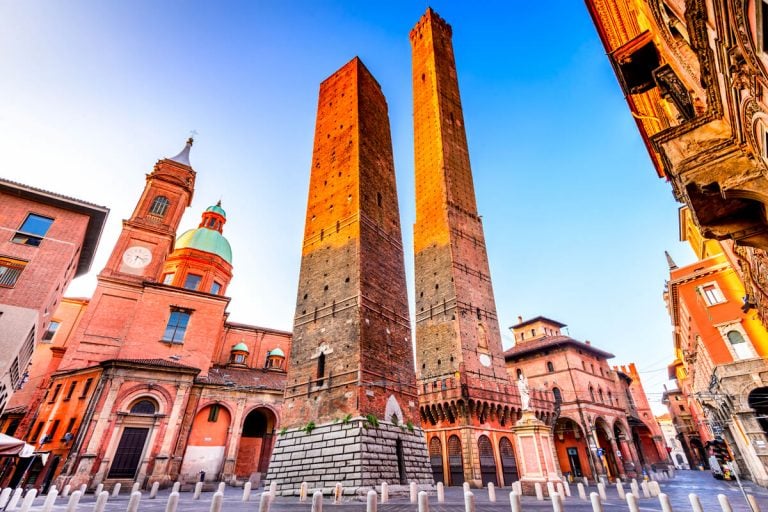
In Bologna, just a stone’s throw from the Two Towers, stands the ancient Complex of Santo Stefano, one of the most venerated sites in the city’s religious tradition.
Built on the remains of a pagan temple and conceived as an ideal reconstruction of the Holy Sepulchre in Jerusalem, the complex underwent numerous expansions and transformations over the centuries.
Today it appears as an intricate layering of sacred buildings – traditionally known as the “seven churches” – that together recount more than a thousand years of Bologna’s history.
Basilica of Santa Maria di Pomposa | Codigoro
Place: Codigoro (Ferrara)
Date of construction: 6th – 7th century onwards
Architectural style: Romanesque art
Curiosities: in this abbey, at the beginning of the 11th century, the Benedictine monk Guido d’Arezzo invented modern musical notation, first devising the tetragram, and later developing the five-line staff used today
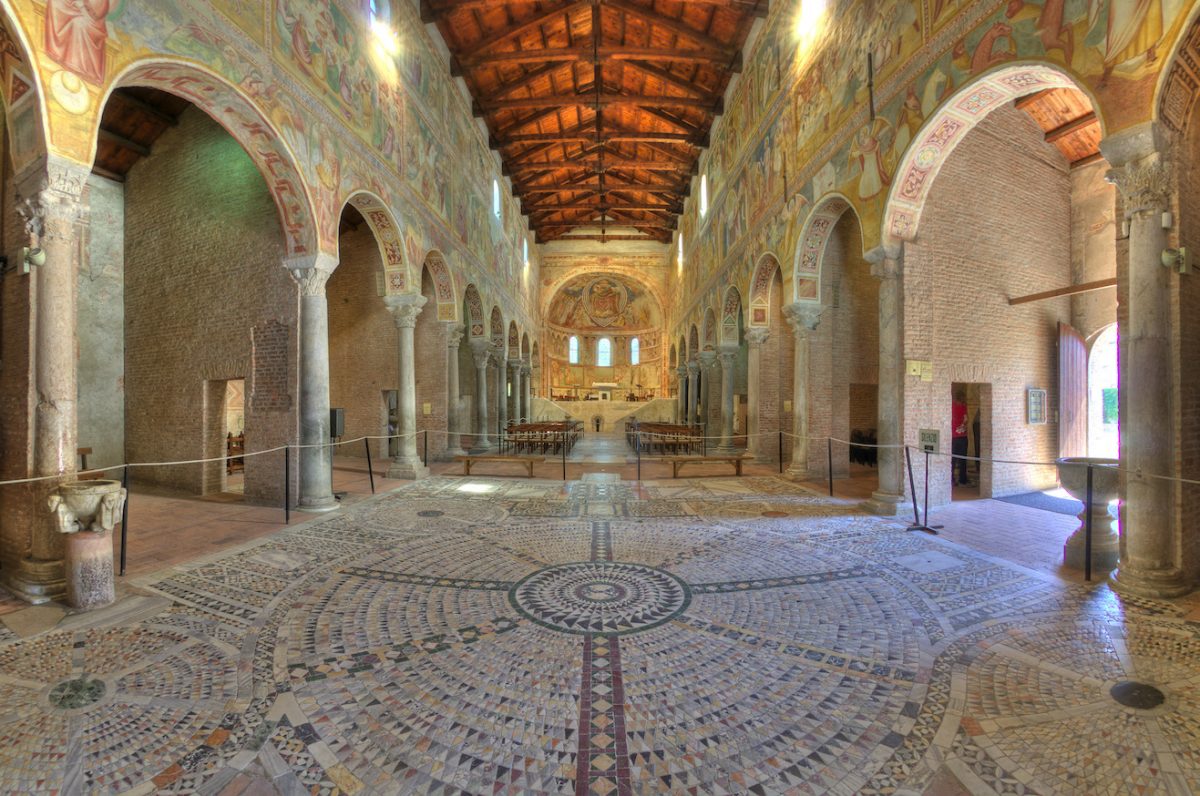
Travelling along the Romea state road that connects Ravenna to Venice, the tall bell tower of the Pomposa Abbey rises on the horizon at the edge of the Po Delta Park. Of Ravennate-Byzantine tradition, the complex traces its origins back to between the sixth and seventh centuries.
Its greatest splendour was reached around the year 1000, when the monastery became one of the most important spiritual and cultural centres in north-central Italy, hosting figures such as Dante Alighieri and Peter Damian. To this same period dates the extraordinary cycle of Giottesque frescoes that adorns the interior of the basilica.
Basilica of Sant'Apollinare in Classe
Place: Ravenna
Period of construction: 6th century
Architectural style: Early-Christian and Byzantine art
Curiosities: it was defined as the best example of Early-Christian Church in the world
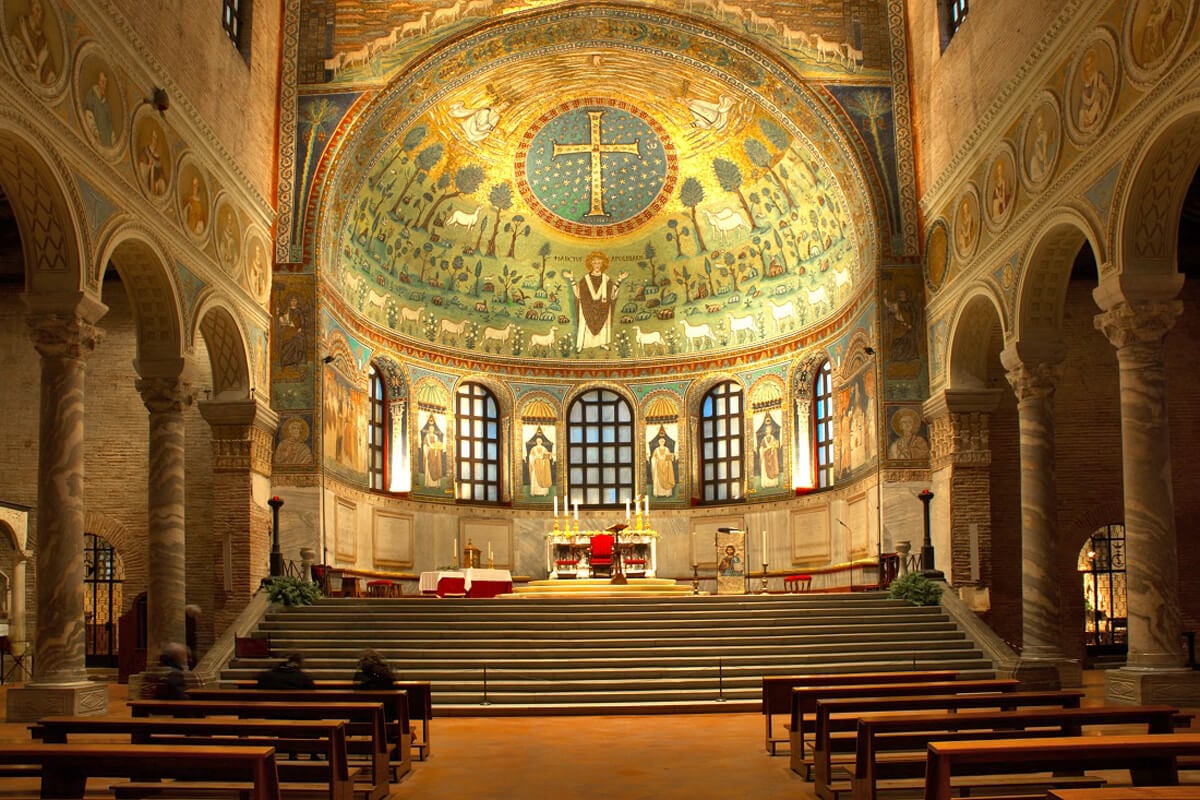
About 8 km south of Ravenna stands the Basilica of Sant’Apollinare in Classe, one of the most distinguished examples of Early Christian art in the world and a UNESCO World Heritage Site.
Sober and linear in its external architectural forms, it reveals an extraordinary splendour within. The three wide naves lead to a large east-facing apse, whose vault preserves what many consider the supreme masterpiece of early Christian mosaic art: a triumphant Christ surrounded by a procession of lambs, in a blaze of gold and colour.
Basilica of San Vitale
Place: Ravenna
Period of construction: 6th century
Architectural style: Early Christian and Byzantine art
Curiosities: an astonishing mosaic labyrinth unfolds across the floor, tracing a path that culminates in a large scallop shell, a symbol of birth and resurrection
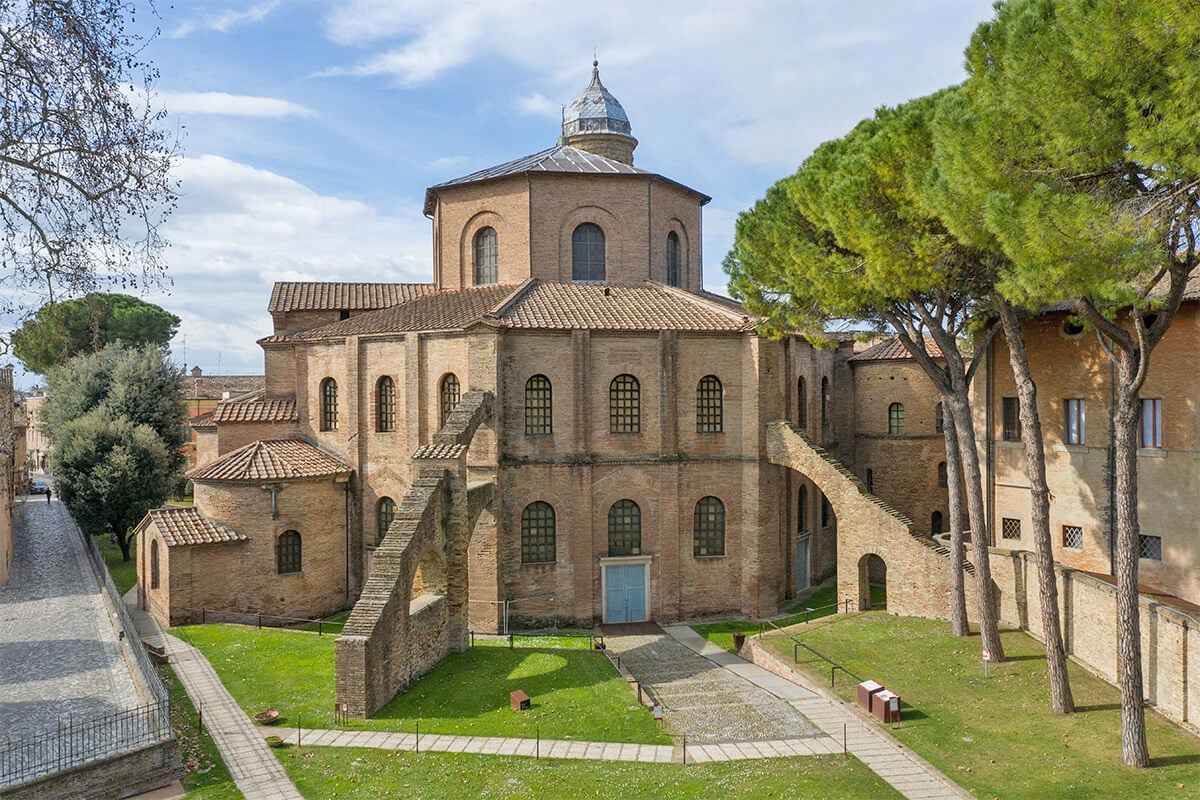
The Basilica of San Vitale stands as one of the pinnacles of Early Christian architecture worldwide and is recognised as a UNESCO World Heritage Site. The building offers an extraordinary synthesis of Eastern and Western artistic traditions, achieved through the mastery of Byzantine mosaic technique.
Commissioned by Emperor Justinian in the sixth century to celebrate his power, San Vitale captivates visitors with the harmony of its octagonal plan, the splendid apse mosaics depicting the emperor and his court, and the striking contrast between the austerity of the early Christian structure and the later Baroque frescoes of the dome.
Cathedral of Santa Colomba (Malatesta Temple)
Place: Rimini
Period of construction: 9th – 12th century
Architectural style: Renessaince art with some Gothic elements
Curiosities: the façade of the temple, left unfinished, was designed by Leon Battista Alberti, who drew inspiration from Classical architecture, in particular from the nearby Arch of Augustus
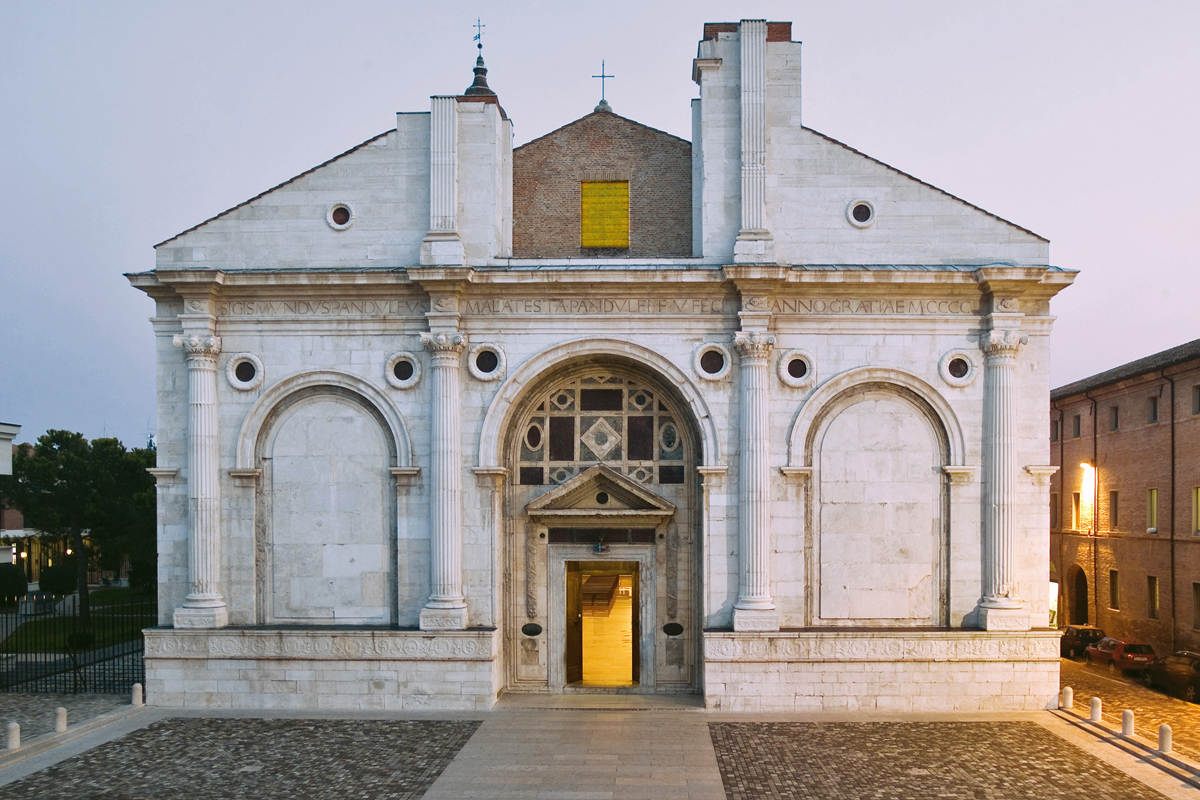
Crossing the threshold of the Tempio Malatestiano in Rimini means stepping into an atmosphere that evokes a classical pantheon more than a Christian church, a reflection of the humanistic ambitions of its patron.
Commissioned by Sigismondo Pandolfo Malatesta as a monument to his own glory and to that of his beloved Isotta degli Atti, the building stands as one of the masterpieces of Italian Renaissance architecture.
Its transformation involved renowned masters such as Leon Battista Alberti, who designed the famous unfinished façade; Piero della Francesca, author of the fresco depicting Sigismondo kneeling; and Agostino di Duccio, responsible for the exquisitely refined sculptural decorations of the interior.
Author
Davide Marino
Davide Marino was born archaeologist but ended up doing other things. Rational – but not methodic, slow – but passionate. A young enthusiast with grey hair
You may also like
Churches in Emilia Romagna: the most beautiful façades
by Davide Marino /// April 23, 2020
The most beautiful Parish Churches in Emilia-Romagna
by Davide Marino /// February 28, 2019
by Davide Marino ///

Interested in our newsletter?
Every first of the month, an email (in Italian) with selected contents and upcoming events.
Churches in Emilia Romagna: the most beautiful façades
by Davide Marino /// April 23, 2020
The most beautiful Parish Churches in Emilia-Romagna
by Davide Marino /// February 28, 2019
by Davide Marino ///
george visser
Good morning mr. Davide Marino,
We are staying in Brisighella end april. Can you give us some hints for visiting roman churches in the vicinity (within a circle of 100 km)? Also the small ones.
thank you for answering
George
Holland
Davide Marino
Hi George, I suggest you use this useful tool: http://www.tourer.it/mappa?lang=en
Thanks to a map search, you can locate and geolocalize all the main cultural emergencies of Emilia Romagna (including Roman churches). Tourer allows the slow traveler to discover and explore hundreds of wonderful places, some of them are well known and some others are less. Furthermore, everybody can improve Tourer, by sending comments and photographs and signaling sites that it does not comprise.
I hope this will help you
Best regards
Davide – staff #inEmiliaRomagna